

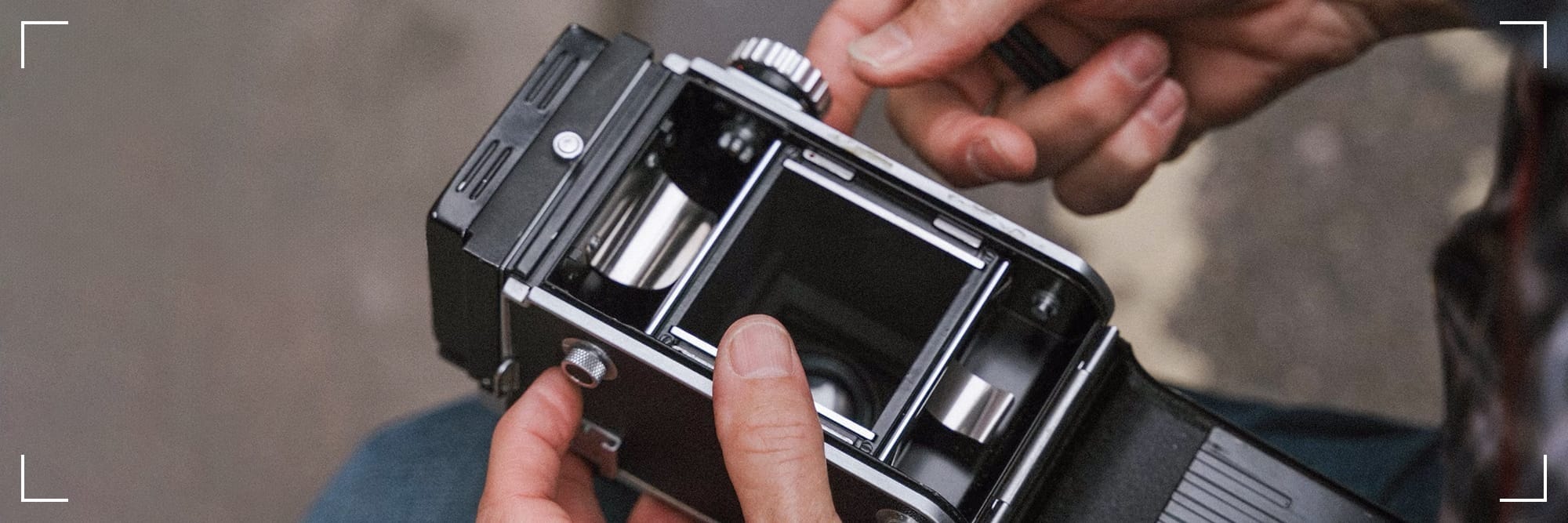
Despite being associated with professional photographers, medium format cameras are accessible to anyone interested in analog photography. The increase in image quality and resolution is notable even with entry-level equipment.
1. Understanding 120 Film
120, more commonly known as medium format film, is characterized by its larger negative size compared to that of 35mm. This contributes to higher resolution and thus more detail as well as smoother gradients in photographs. It can be used in 6x4.5, 6x6 and 6x9 cameras; depending on the model, this affects the number of shots per roll.
2. Choosing A Medium Format Camera
Medium format cameras come in various forms including SLR (Single Lens Reflex), TLR (Twin Lens Reflex) and rangefinders. While some models can be expensive, there are affordable options available in the second-hand market.
3. Choosing A Film Stock
→ Kodak TRI-X 400: black & white, versatile, classic
→ Kodak Portra 400: high speed, fine grain, exceptional skin tones
→ Kodak Ektar 100: ultra-fine grain, high saturation, vibrant landscapes
→ Fujifilm Fujichrome Velvia 50: ultra-fine grain, hi-def, vivid color reproduction
→ Fujifilm Provia 100F: fine grain, neutral color, excellent sharpness
→ Fujifilm Acros 100II: ultra-fine grain, classic black and white
4. Research Lenses
Due to the larger negative size, lens focal lengths behave differently in medium format compared to 35mm. For instance, a 50mm lens on a 6x4.5 camera would approximate an 80mm lens on a full-frame 35mm camera. This difference impacts the perspective and depth of field of images.
5. Using An Incident Light Meter
An incident light meter can help you determine the correct exposure for your film (especially in challenging lighting conditions). This tool is essential since you cannot instantly preview your photos as you would be able to with a digital camera.
6. Film Handling
Loading and unloading 120 film requires careful handling to avoid exposing the film to light. Find and follow the appropriate procedure for the camera of your choice. Label exposed roles accordingly.
Considerations For Beginners
One of the downsides of medium format photography is the lower number of frames per roll compared to 35mm (10-16 instead of ~36 or ~72 on half frame). Additionally, medium format cameras and film can be more expensive. However, the increased resolution and detail can justify the investment for many photographers.
1. Understanding 120 Film
120, more commonly known as medium format film, is characterized by its larger negative size compared to that of 35mm. This contributes to higher resolution and thus more detail as well as smoother gradients in photographs. It can be used in 6x4.5, 6x6 and 6x9 cameras; depending on the model, this affects the number of shots per roll.
2. Choosing A Medium Format Camera
Medium format cameras come in various forms including SLR (Single Lens Reflex), TLR (Twin Lens Reflex) and rangefinders. While some models can be expensive, there are affordable options available in the second-hand market.
3. Choosing A Film Stock
→ Kodak TRI-X 400: black & white, versatile, classic
→ Kodak Portra 400: high speed, fine grain, exceptional skin tones
→ Kodak Ektar 100: ultra-fine grain, high saturation, vibrant landscapes
→ Fujifilm Fujichrome Velvia 50: ultra-fine grain, hi-def, vivid color reproduction
→ Fujifilm Provia 100F: fine grain, neutral color, excellent sharpness
→ Fujifilm Acros 100II: ultra-fine grain, classic black and white
4. Research Lenses
Due to the larger negative size, lens focal lengths behave differently in medium format compared to 35mm. For instance, a 50mm lens on a 6x4.5 camera would approximate an 80mm lens on a full-frame 35mm camera. This difference impacts the perspective and depth of field of images.
5. Using An Incident Light Meter
An incident light meter can help you determine the correct exposure for your film (especially in challenging lighting conditions). This tool is essential since you cannot instantly preview your photos as you would be able to with a digital camera.
6. Film Handling
Loading and unloading 120 film requires careful handling to avoid exposing the film to light. Find and follow the appropriate procedure for the camera of your choice. Label exposed roles accordingly.
Considerations For Beginners
One of the downsides of medium format photography is the lower number of frames per roll compared to 35mm (10-16 instead of ~36 or ~72 on half frame). Additionally, medium format cameras and film can be more expensive. However, the increased resolution and detail can justify the investment for many photographers.